




























Selecting the right automotive lift is one of the most critical investments for commercial repair facilities, automotive restoration specialists, and home garage enthusiasts. When evaluating commercial vehicle lifts, the primary decision centers between 2-post car lifts and 4-post vehicle lifts. Each design offers distinct operational advantages depending on your ceiling height, concrete slab thickness, intended service work, and vehicle storage requirements.
Key Differences at a Glance
While both 2-post and 4-post lifts raise vehicles safely for undercarriage access, their structural design, footprint, and vehicle support mechanisms differ significantly:
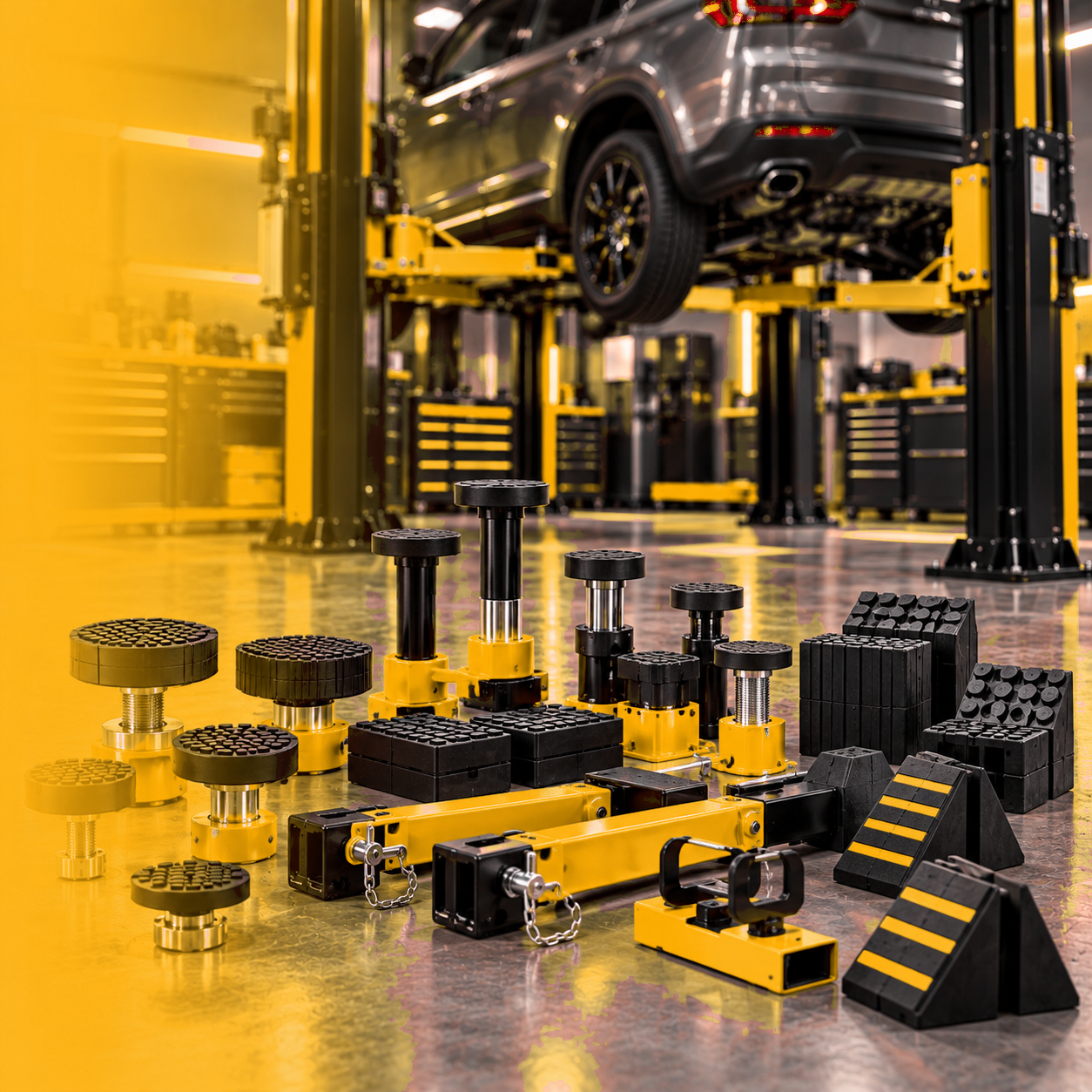
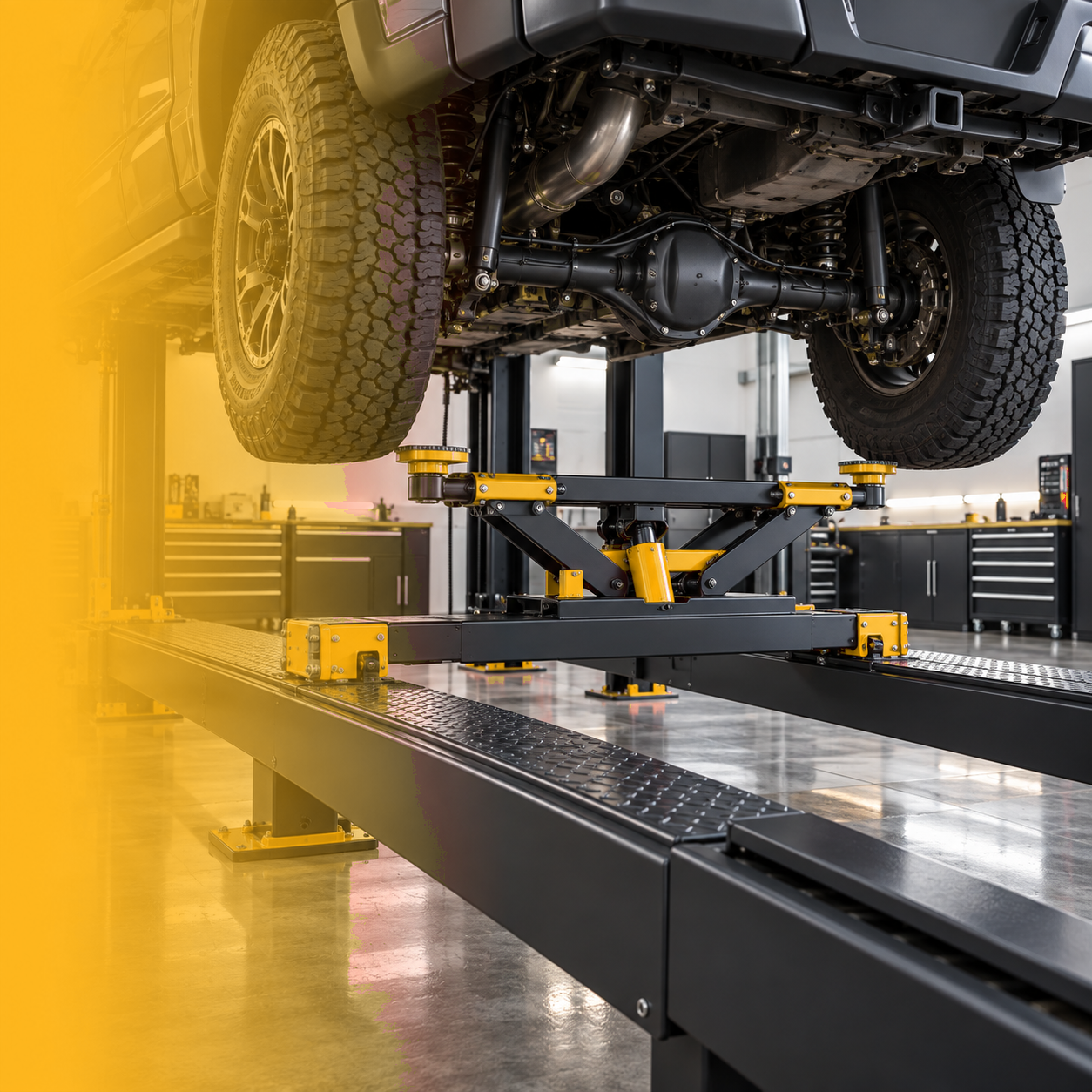
- 2-Post Car Lifts: Frame-engaging lifts where the vehicle rests on four adjustable swing arms. Provides complete “wheels-free” suspension and brake access with the smallest floor footprint.
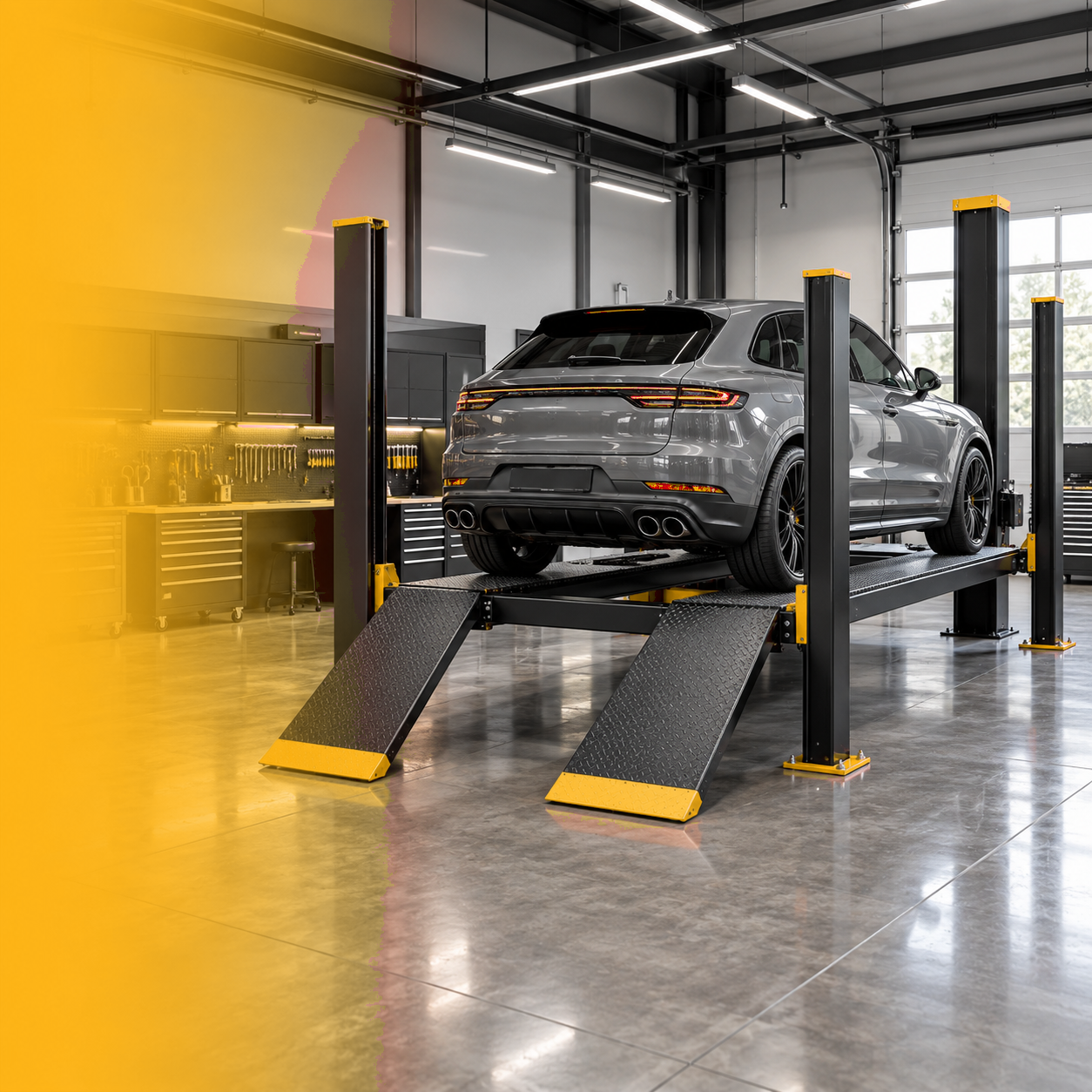
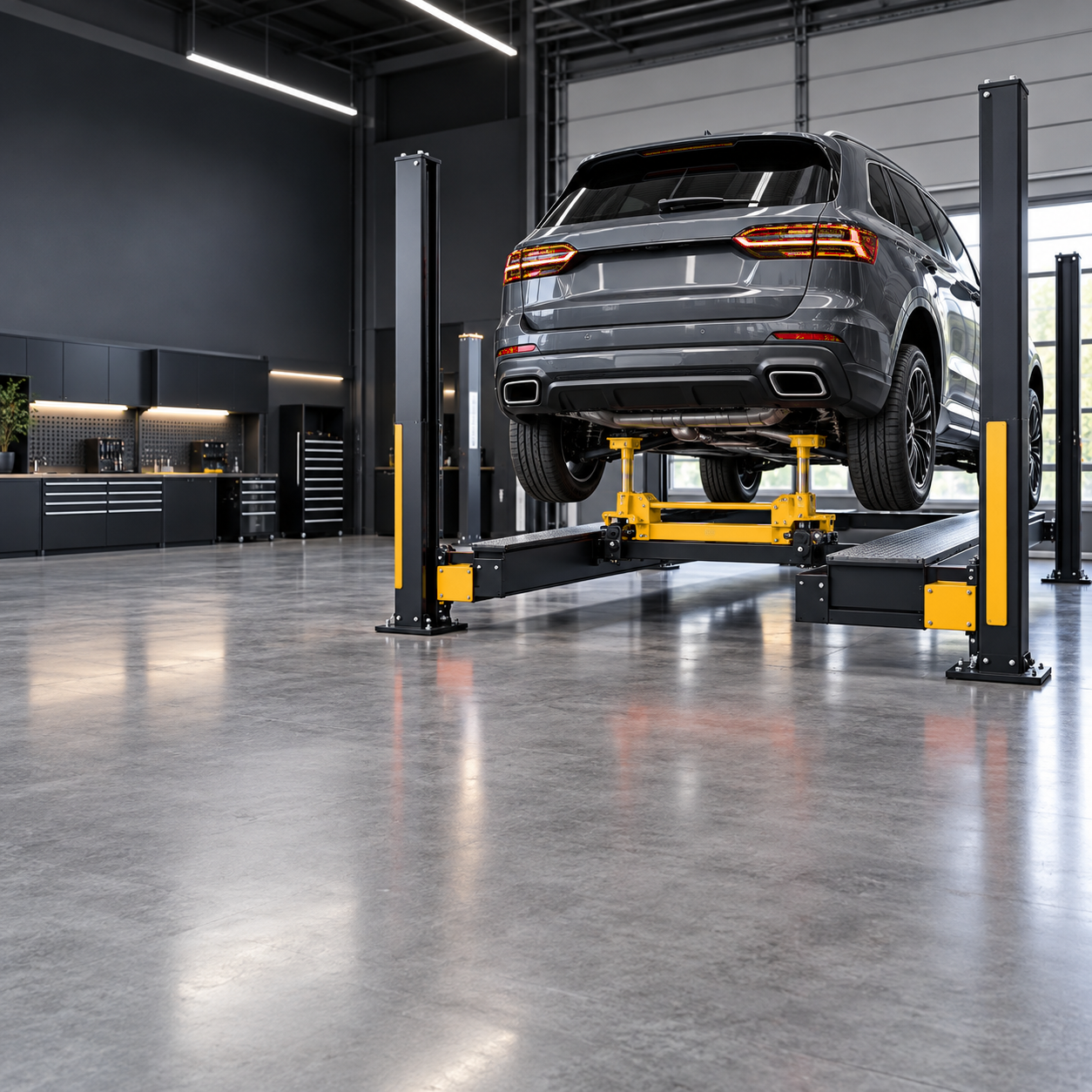
- 4-Post Car Lifts: Drive-on runway lifts where the vehicle rests on heavy-gauge steel ramps. Ideal for vehicle storage/parking multiplication, routine fluid changes, wheel alignments, and heavy fleet service.
When to Choose a 2-Post Car Lift
A 2-post car lift is the industry standard for professional mechanical repair. Because the lift engages the vehicle frame rather than the tires, the wheels hang free immediately upon raising. This configuration provides unobstructed access for:
- Complete brake service, rotor replacement, and caliper maintenance
- Wheel, tire, and suspension component overhauls
- Transmission removals, clutch replacements, and drivetrain repairs
- Exhaust system fabrication and underbody chassis work
Clear-Floor vs. Floor-Plate 2-Post Lifts
2-post lifts are available in two primary configurations: Clear-Floor (Overhead Beam) and Floor-Plate (Base Plate). Clear-floor models run hydraulic lines and equalization cables through an overhead crossbar, leaving the floor completely flat for rolling oil drains and transmission jacks. Floor-plate models house hydraulic lines beneath a low-profile floor threshold, making them ideal for garages with ceiling heights under 12 feet.
When to Choose a 4-Post Car Lift
A 4-post vehicle lift is the ultimate choice for vehicle storage, quick maintenance, and heavy commercial applications. Driving directly onto the runways eliminates the need to bend down and position swing arms under designated chassis lift points.
- Double Your Parking Space: A 4-post lift allows you to park one vehicle on the runways in the raised position and park a second vehicle underneath, effectively doubling single-stall storage capacity.
- No Permanent Floor Anchoring Required for Storage: Many residential 4-post lifts can be operated free-standing with an optional caster kit for mobility.
- High Capacity Fleet Capability: Available in capacities ranging from 7,000 lbs up to 40,000 lbs for commercial trucks, RVs, and municipal fleet vehicles.
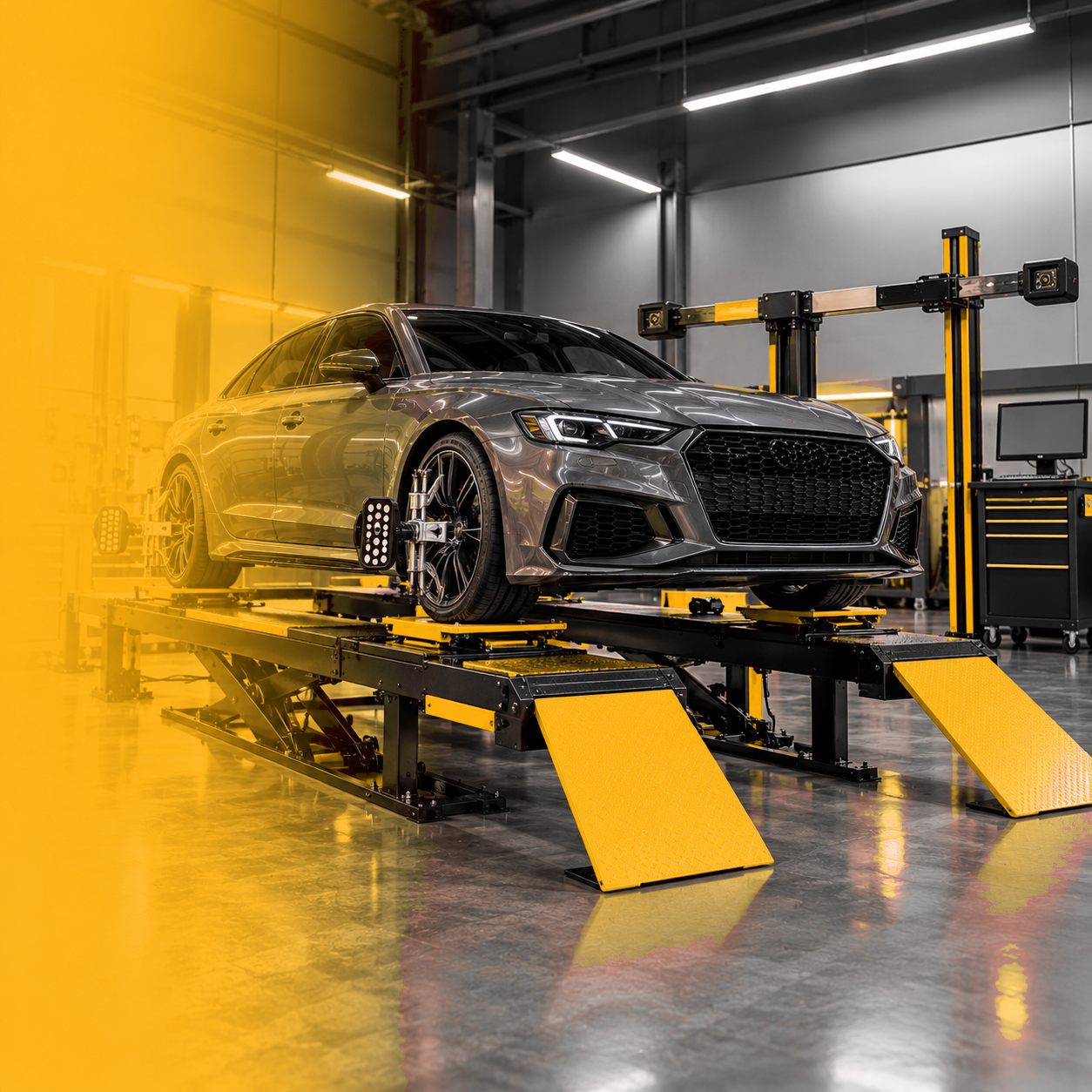
- Wheel Alignment Capability: Specialized alignment 4-post lifts incorporate slip plates and turnplate pockets for precision alignment calibration.
Concrete & Installation Requirements
Before installing any automotive lift, verify that your garage floor meets manufacturer specifications:
- 2-Post Lifts: Require a minimum 4-inch (preferably 6-inch for 12K+ lb models) reinforced concrete slab rated at 3,000 PSI minimum. Concrete must be fully cured (at least 28 days) and free of cracks near anchor locations.
- 4-Post Lifts: Distribute weight across four contact points, typically requiring a standard 4-inch 3,000 PSI slab.
- Electrical Requirements: Most commercial 2-post and 4-post power units operate on 208–230V single-phase 30-amp dedicated circuits, while smaller portable units may utilize 110V 20A power.
Explore our complete inventory of automotive vehicle lifts with free standard freight shipping across the United States at Greg Smith Equipment Sales.
Leave a Reply